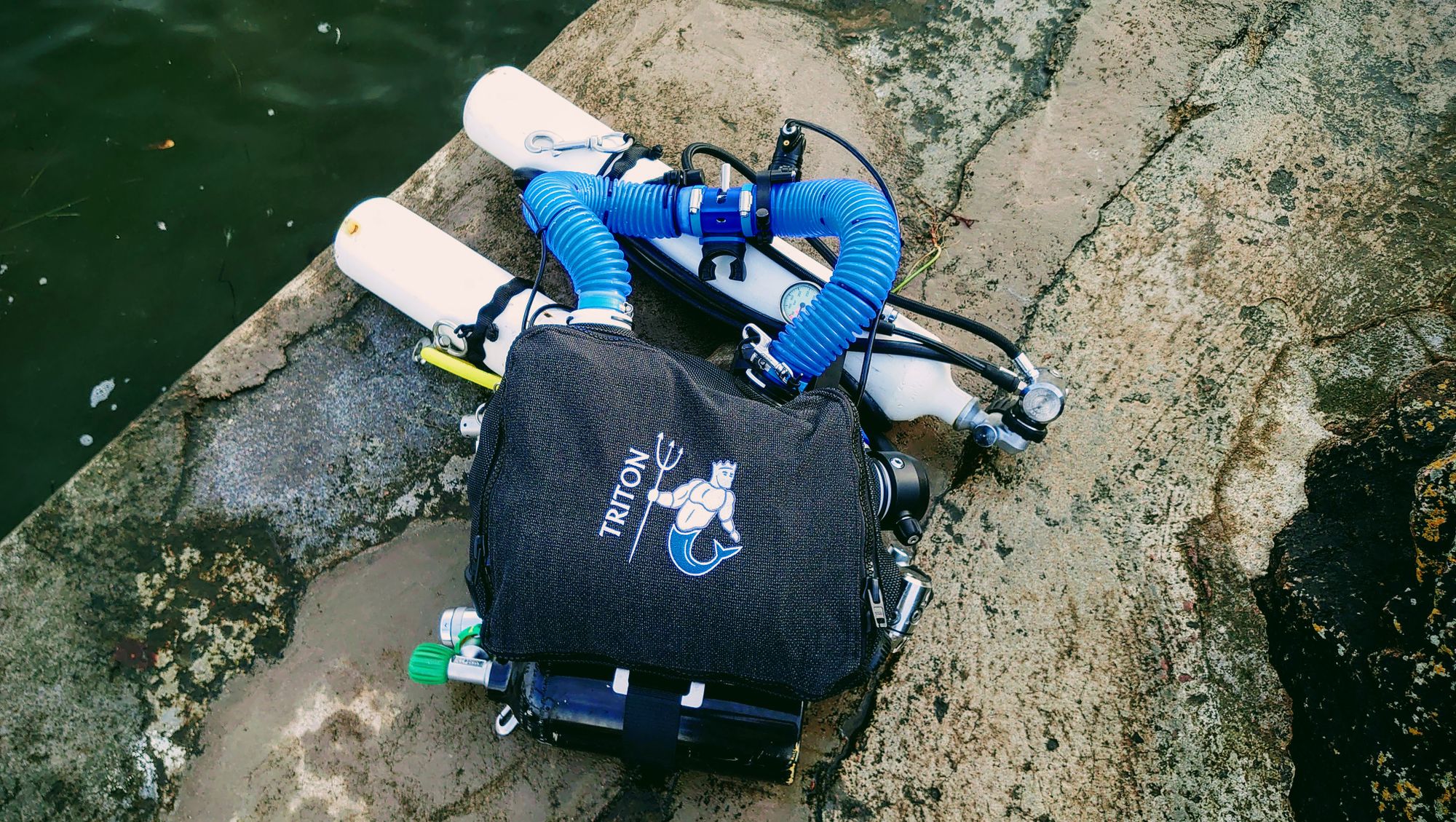
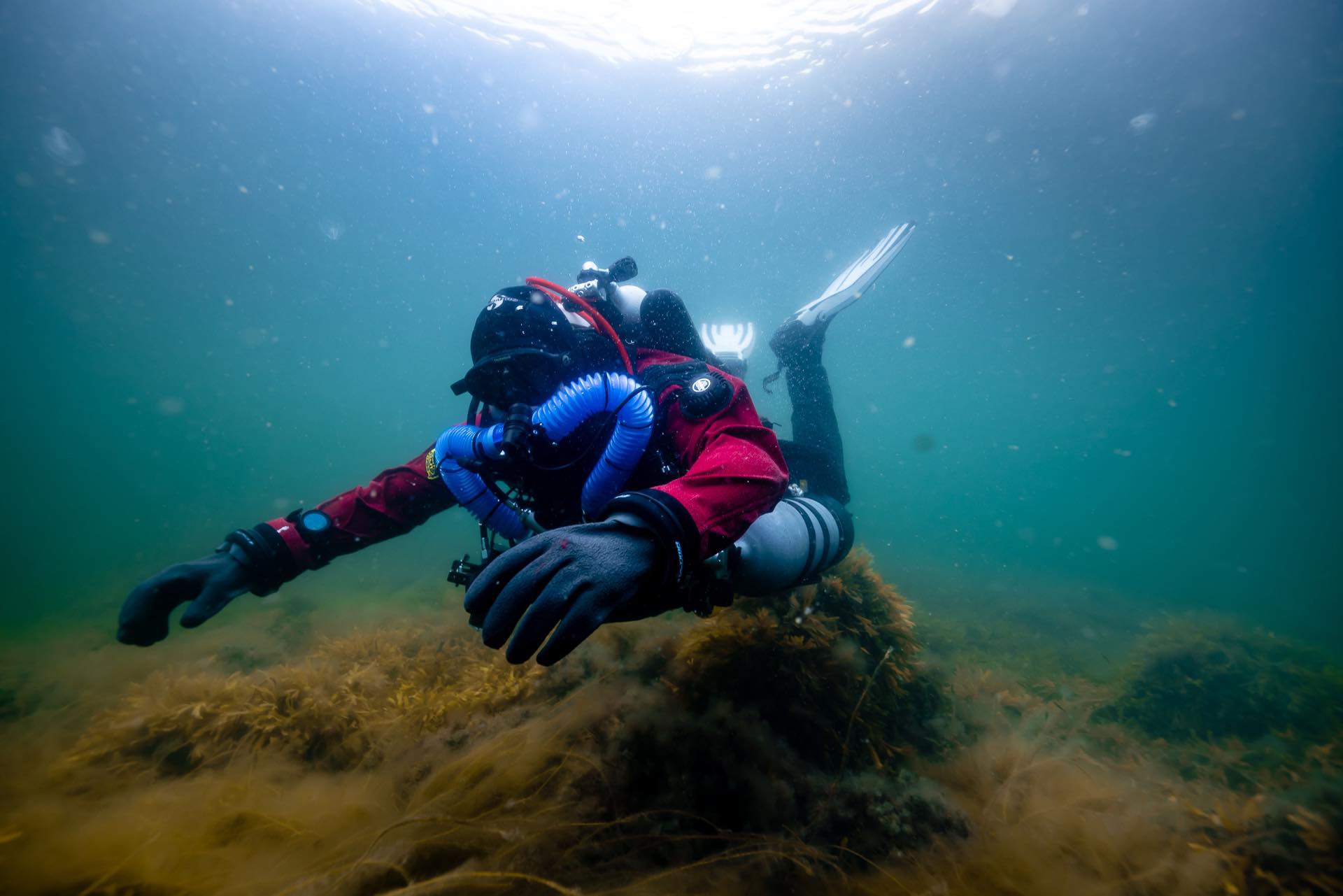
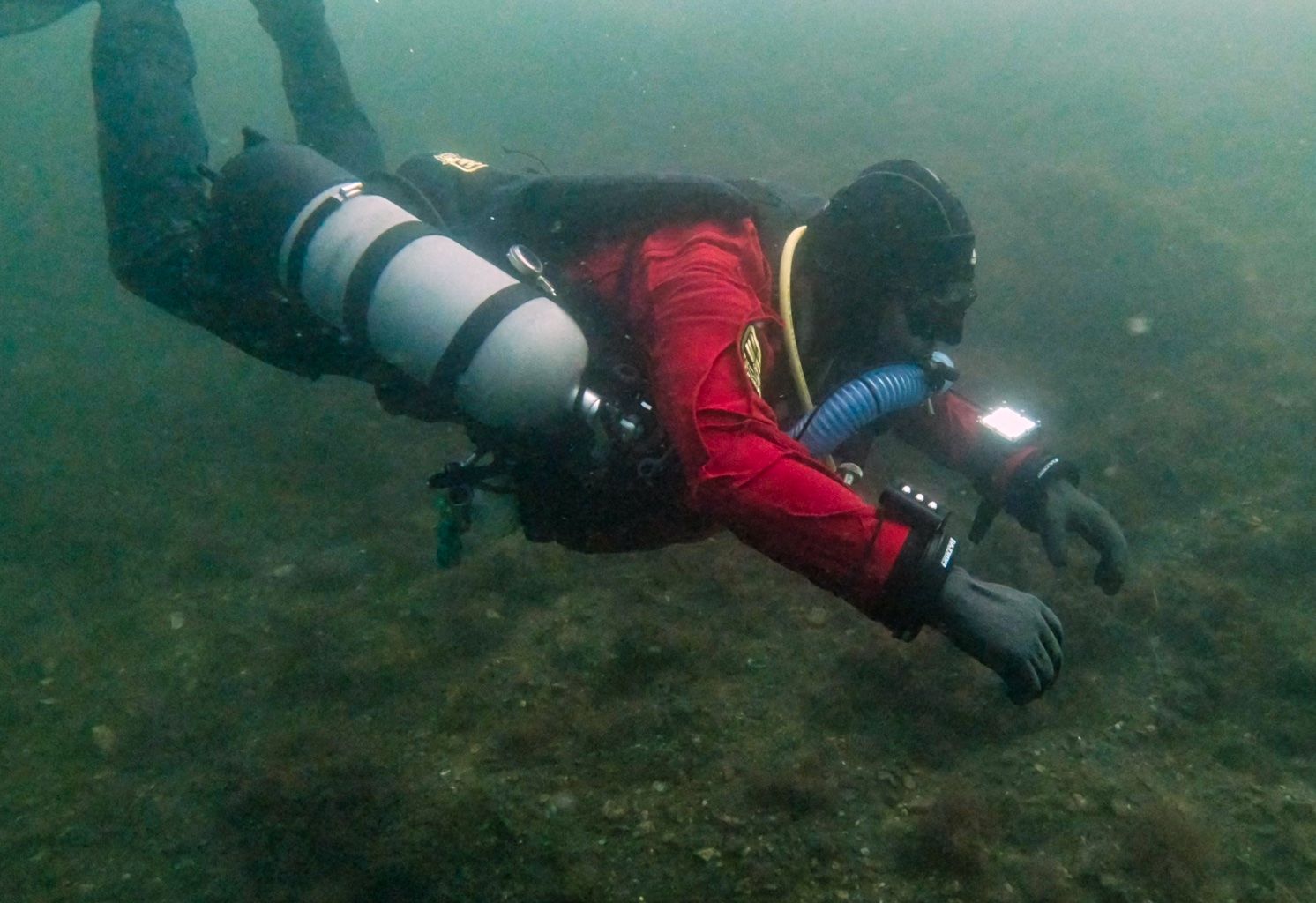
The blue moustache, a french handbag with vacuum hose... a divers best friend?
In 2019 I decided it was time to get into rebreather diving. Initially I had my eyes set on a JJ but ended up getting a Pelagian DCCCR as I felt a manually controlled rebreather suit me better. After close to 100 hours on that machine I still felt a bit like a swimming refrigerator and needed a change.
I evaluated three different kinds of rebreathers that all moved the rebreather away from the back:
T-Reb, a sidemounted ECCR
Kiss Sidewinder, dual-scrubber sidemounted MCCR
Triton, a chest-mounted MCCR
In the end I settled on the Triton as it seemed to be the most versatile, and as a bonus, an instructor on it lives close by. Also, the idea of having the entire rebreather in one detachable package really appealed to me.
The Rebreather
The Triton CCR is a manual chest-mounted rebreather. It's manufactured in France and is CE rated down to 100 meters. It came packaged in a nice blue crate and arrived 5 weeks after ordering.
Apart from the basic rebreather, I added a Shearwater NERD 2. The package also included a bag of spare parts and a T-shirt. Below is a picture of all the included components.
The Crossover Course
I did the crossover course with Johan Asplund in the south of Sweden during a very windy October. Because of hurricane winds, we did our initial dive at Dalby quarry which was really good exercise since it's shallow and silt out really easily. I didn't see anything other than Johan but we drilled a lot and I got quite comfortable with the rebreather.
Next day the wind was still really strong but we managed to do two dives at Ön in Limhamn, Malmö. Again it was a lot of drills and at the end of it I felt really comfortable diving the Triton.
For the last two dives we carried our gear down to Ablaham at Kullaberg to get a bit more depth on our dives. We swam far out on the sandy bottom and found 25 meters at least. We did a lot of drills on these dives as well and here is a list of all the skills we practiced (though I might have forgotten to note something in the log book):
Hyperoxia drill (diluent flush)
Hypoxia drill
Mask removal and replacement
Cell validation
Removing and donning rebreather underwater
Displace moisture from oxygen sensor cells
Tank exchanges
Diving the Triton as a semi-closed rebreather
Recovery of unconscious diver
Towing a diver
Bailout
Boom drills (turning valves)
Out-of-gas diver
Switching diluent hoses
Simulated CO2 hit
SMB deployment
Emptying water from loop
All in all we did 5 dives and at the end I felt really comfortable diving the Triton. Johan is a truly excellent instructor with so much experience that he had answers to all my scenarios and equipment configuration questions. I'll definitely try to do more courses with him in the future, perhaps next will be DPV Overhead or CCR Mine/Cave.
First Impressions
What can I say, I'm super happy with the decision to go French. It's an easy to use machine that breathes beautifully. Its only drawback I can think of at this point is the Monox PO2 display. It's bulky, not very useful and of poor quality. Fortunately it stays turned off as a backup in case the Shearwater NERD fails.
This short video is from the first dive after the crossover course, practicing removing the rebreather and putting it back on. For those shallow dives the 4 liter sidemounted tanks are super nice. When I dive from boats I put the same tanks on the back (with same hose configuration) instead to make it easy to put on and quick to get in and out of the water. I do the same when I need to carry bailout and deco stages for overhead diving.